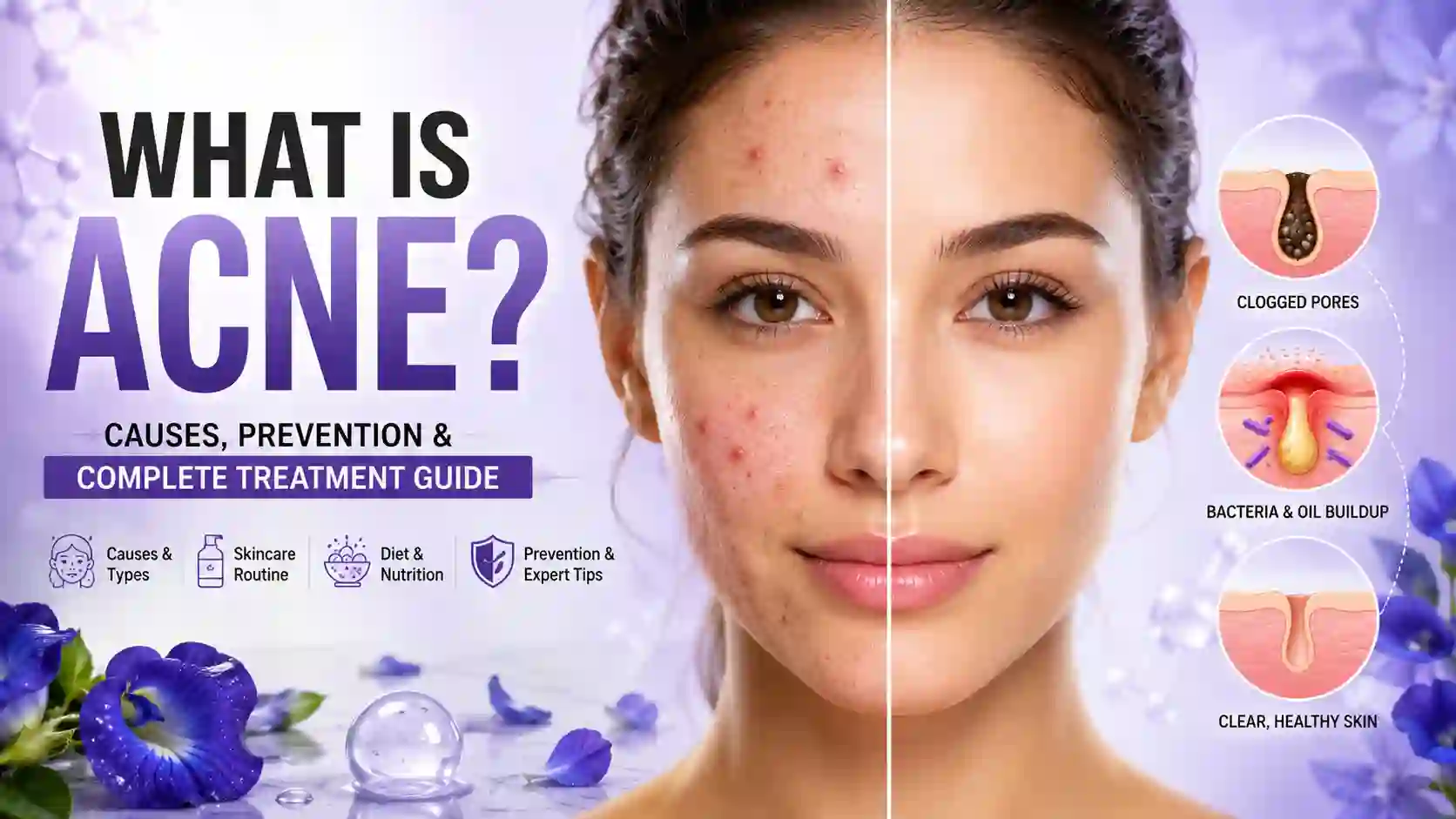
What Is Acne? The Complete Guide to Understanding and Treating Acne
Have you ever looked in the mirror and wondered why pimples keep appearing despite trying different remedies?
You’re not alone.
Acne affects millions of teenagers and adults worldwide. While many people consider acne a temporary skin problem, untreated acne can lead to stubborn scars, dark spots, low confidence, and long-term skin damage.
The good news is that acne can be managed effectively when you understand its causes and choose the right skincare routine, diet, and lifestyle habits.
In this comprehensive guide, we’ll explore:
✔ What acne is
✔ What causes acne
✔ Different types of acne
✔ Why acne gets worse
✔ Foods that help and harm acne-prone skin
✔ Best skincare routine for acne
✔ How to prevent acne scars
✔ Expert tips for clear, healthy skin
Let’s dive in.
What Is Acne?
Acne is a common skin condition that occurs when hair follicles become clogged with excess oil (sebum), dead skin cells, bacteria, and impurities.
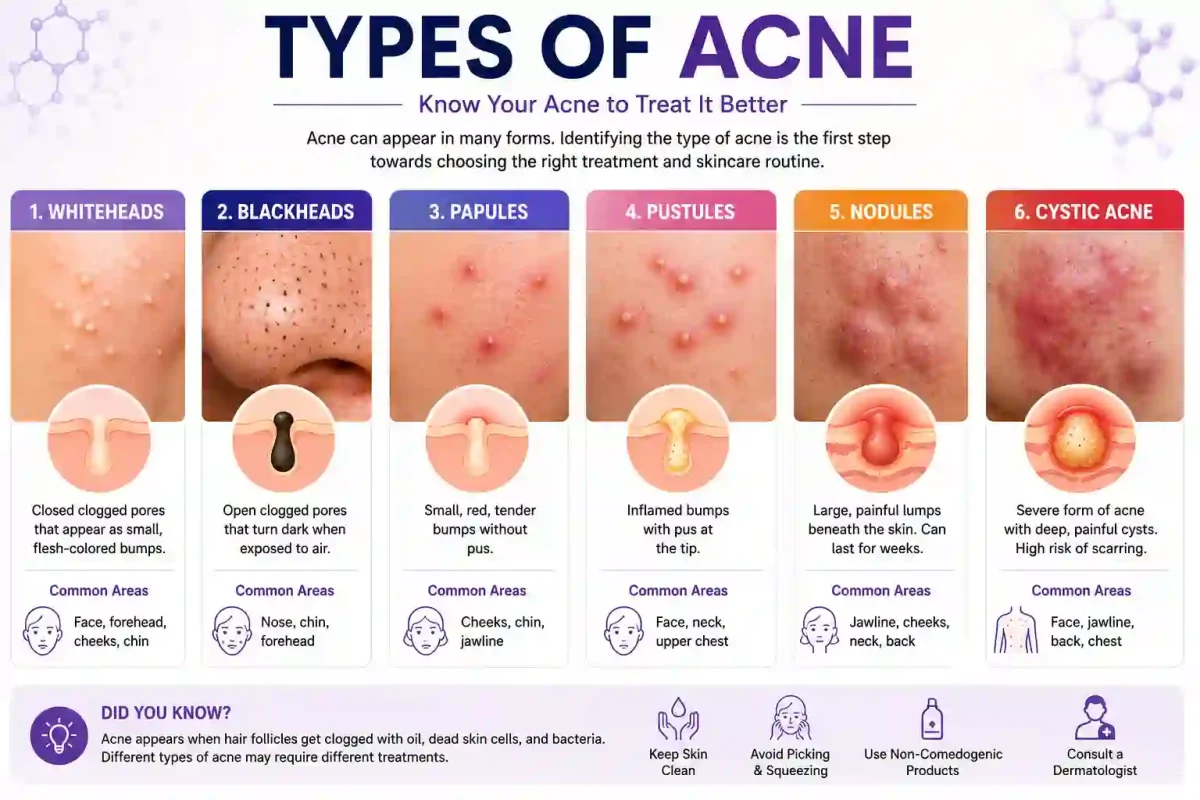
These clogged pores can develop into:
-
Whiteheads
-
Blackheads
-
Pimples
-
Papules
-
Pustules
-
Nodules
-
Cystic acne
Acne most commonly appears on:
-
Face
-
Forehead
-
Nose
-
Chin
-
Neck
-
Chest
-
Back
-
Shoulders
Although acne is often associated with teenagers, adults can experience acne at any age.
How Does Acne Form?
Understanding the acne formation process is the first step toward preventing breakouts.
Step 1: Excess Oil Production
The skin produces natural oil called sebum to keep it moisturized.
When the sebaceous glands produce too much oil, pores become clogged.
Step 2: Dead Skin Cell Build-Up
Dead skin cells normally shed from the skin surface.
When these cells accumulate inside pores, blockages occur.
Step 3: Bacterial Growth
A bacteria called Cutibacterium acnes can multiply inside clogged pores.
Step 4: Inflammation
The immune system reacts to bacteria and blockage, causing redness, swelling, and painful pimples.
What Causes Acne?
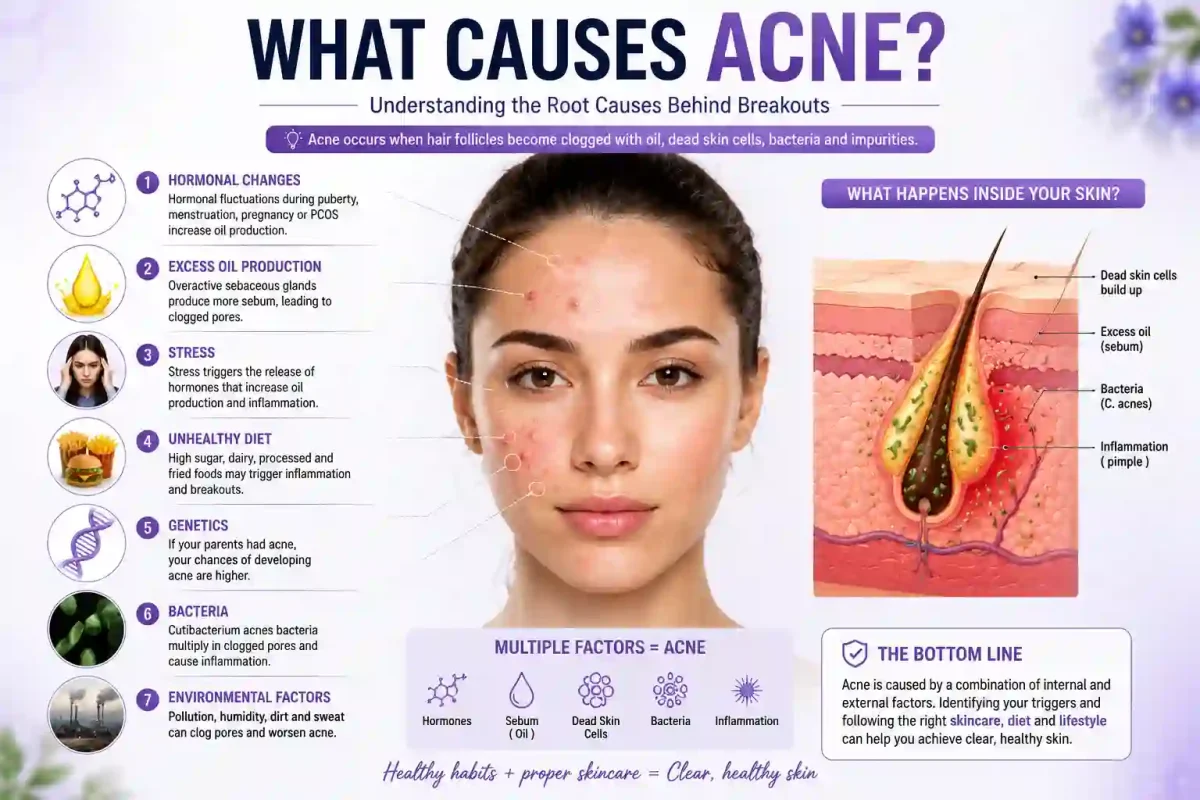
Several factors contribute to acne development.
1. Hormonal Changes
Hormonal fluctuations increase oil production.
Common triggers include:
-
Puberty
-
Menstrual cycles
-
Pregnancy
-
PCOS
-
Menopause
2. Excess Oil Production
Oily skin naturally produces more sebum, increasing the likelihood of clogged pores.
3. Stress
Stress does not directly cause acne but can worsen existing breakouts by increasing inflammatory hormones.
4. Poor Skincare Habits
Common mistakes include:
-
Sleeping with makeup
-
Using pore-clogging products
-
Overwashing the face
-
Harsh scrubbing
5. Diet
Certain foods may trigger acne in susceptible individuals.
6. Genetics
If your parents had acne, your risk may be higher.
7. Environmental Factors
-
Pollution
-
Humidity
-
Sweat accumulation
-
Dirt exposure
can contribute to acne flare-ups.
Different Types of Acne
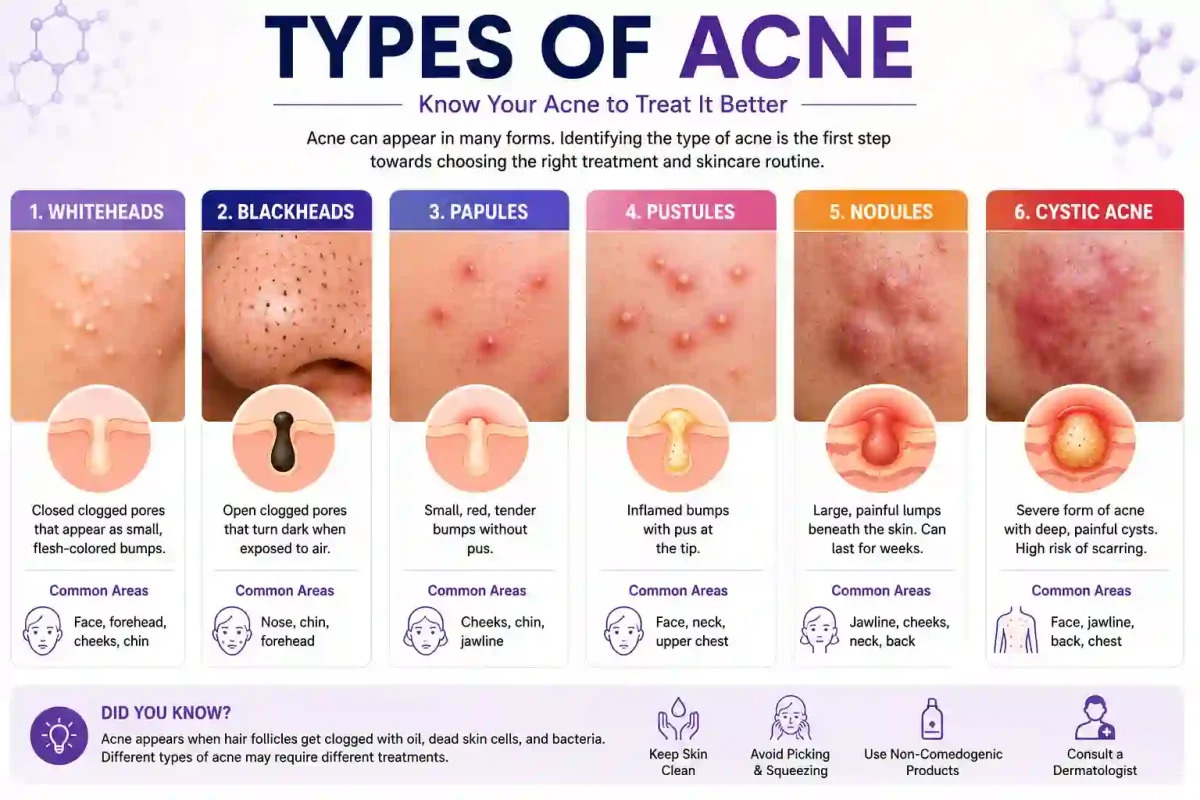
Whiteheads
Closed clogged pores appearing as small white bumps.
Blackheads
Open clogged pores that oxidize and appear black.
Papules
Small red inflamed bumps.
Pustules
Red pimples containing pus.
Nodules
Large painful lumps beneath the skin.
Cystic Acne
The most severe form of acne.
Characteristics include:
-
Deep inflammation
-
Severe pain
-
High risk of scarring
Professional dermatological treatment is often required.
Why Does Acne Become Worse?
Many people unknowingly make acne worse.
Picking and Squeezing Pimples
This spreads bacteria and increases inflammation.
Using Harsh Products
Strong scrubs can damage the skin barrier.
Skipping Moisturizer
Dehydrated skin may produce more oil.
Frequent Face Touching
Hands transfer dirt and bacteria to the skin.
Poor Diet Choices
High-sugar and highly processed foods may contribute to inflammation.
Inconsistent Skincare
Acne treatment requires patience and consistency.
Signs Your Acne Needs Immediate Attention
Consult a dermatologist if you experience:
-
Severe cystic acne
-
Painful nodules
-
Rapidly worsening breakouts
-
Permanent scarring
-
Emotional distress due to acne
Best Skincare Routine for Acne-Prone Skin
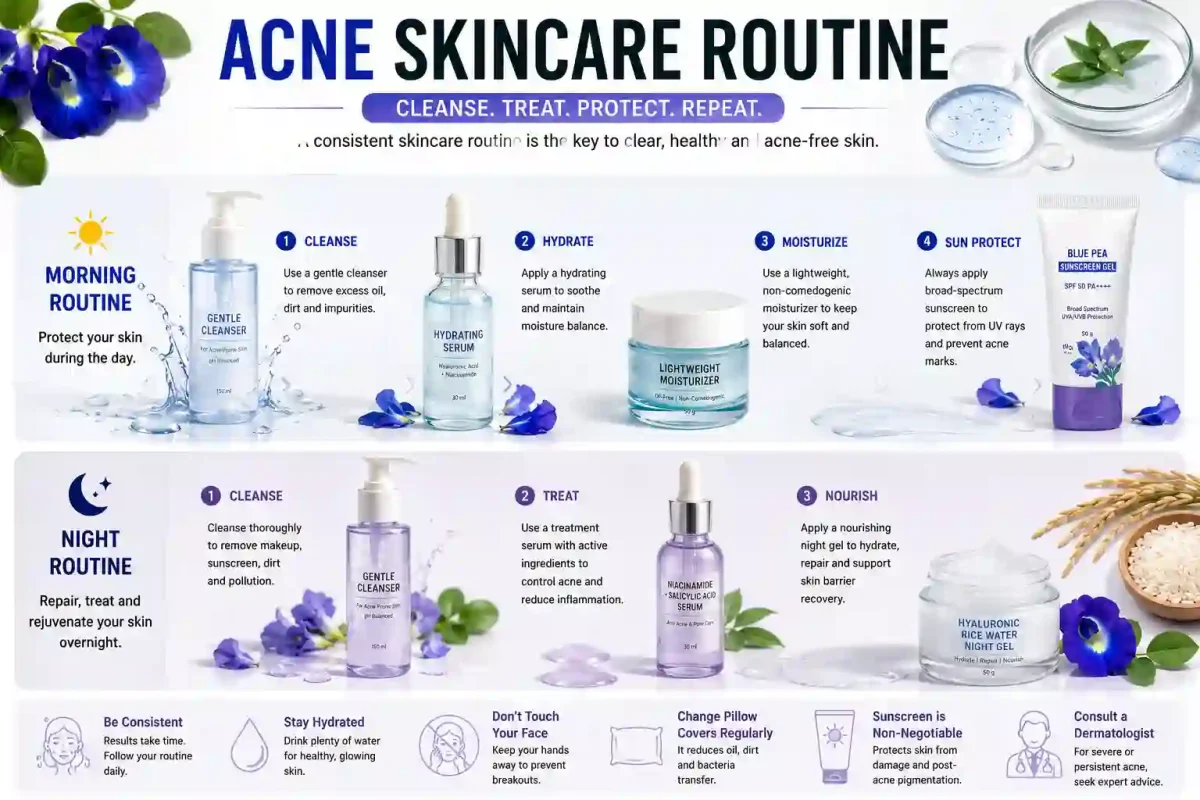
Following a consistent routine can significantly improve skin appearance.
Morning Routine
Step 1: Gentle Cleanser
Use a mild cleanser to remove excess oil and impurities.
Step 2: Hydrating Serum
Ingredients like Hyaluronic Acid help maintain moisture balance.
Step 3: Lightweight Moisturizer
Choose non-comedogenic formulations.
Step 4: Sunscreen
Daily sunscreen protects against pigmentation and post-acne marks.
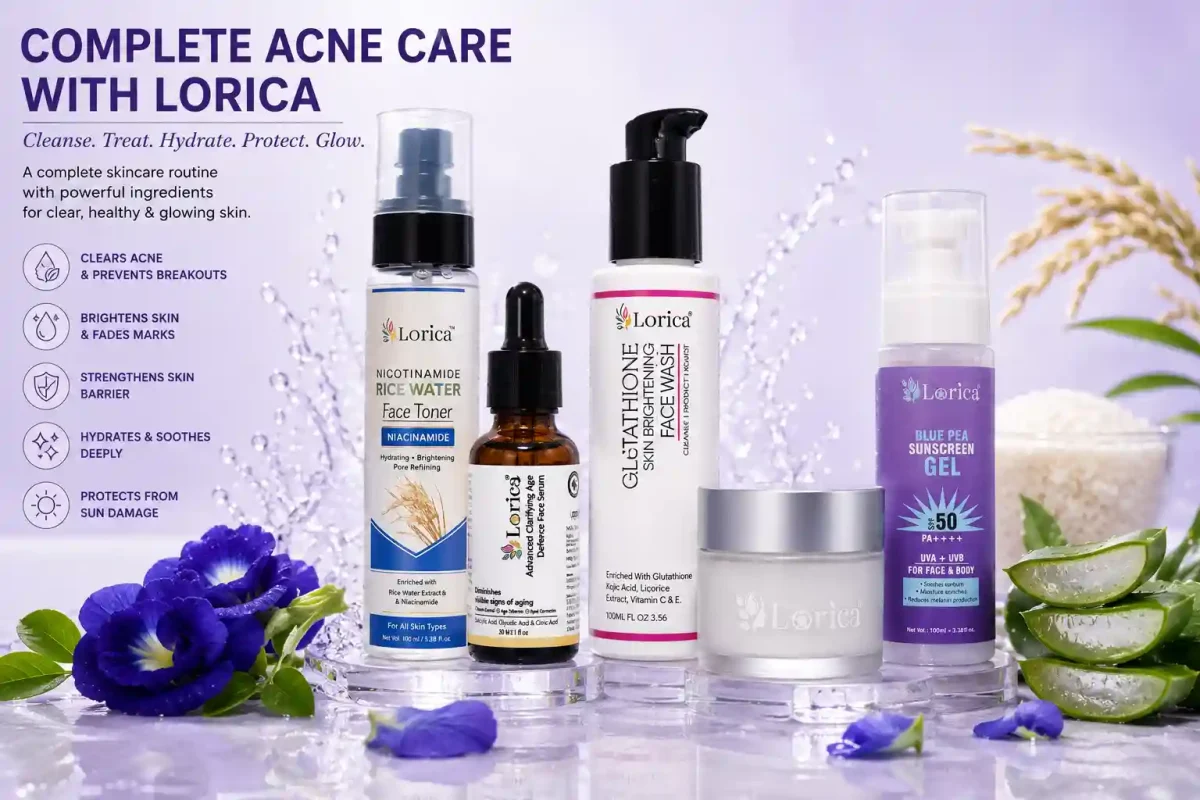
A lightweight sunscreen such as Lorica Blue Pea Sunscreen Gel can help protect the skin from harmful UV exposure while maintaining a comfortable, non-greasy finish.
Night Routine
Step 1: Cleanse Thoroughly
Remove dirt, oil, sunscreen, and pollutants.
Step 2: Treatment Serum
Look for ingredients such as:
-
Niacinamide
-
Salicylic Acid
-
Hyaluronic Acid
Step 3: Night Gel or Moisturizer
Hydrating products help support skin barrier recovery overnight.
Products containing ingredients like rice water and hyaluronic acid can help maintain hydration while supporting smoother-looking skin.
Best Ingredients for Acne-Prone Skin
Salicylic Acid
Helps unclog pores.
Niacinamide
Reduces redness and supports oil balance.
Hyaluronic Acid
Provides hydration without heaviness.
Green Tea Extract
Offers antioxidant support.
Aloe Vera
Helps soothe irritated skin.
Blue Pea Extract
Rich in antioxidants that help protect skin from environmental stressors.
Foods That Help Reduce Acne
A skin-friendly diet can support healthier-looking skin.
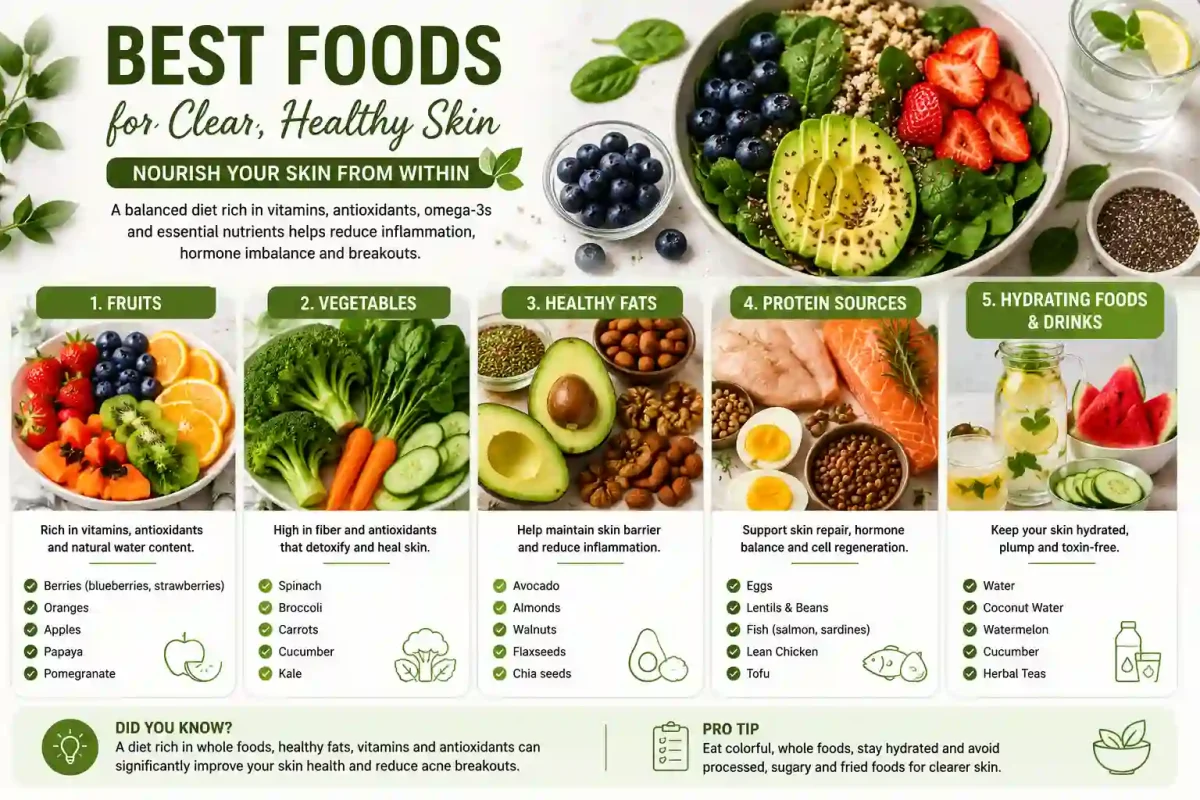
Fruits
-
Berries
-
Oranges
-
Apples
-
Papaya
Vegetables
-
Spinach
-
Broccoli
-
Carrots
-
Cucumber
Healthy Fats
-
Walnuts
-
Almonds
-
Flaxseeds
-
Chia seeds
Protein Sources
-
Eggs
-
Lentils
-
Fish
-
Lean chicken
Hydrating Foods
-
Watermelon
-
Coconut water
-
Cucumbers
Foods That May Trigger Acne
While triggers vary from person to person, some people notice breakouts after consuming:
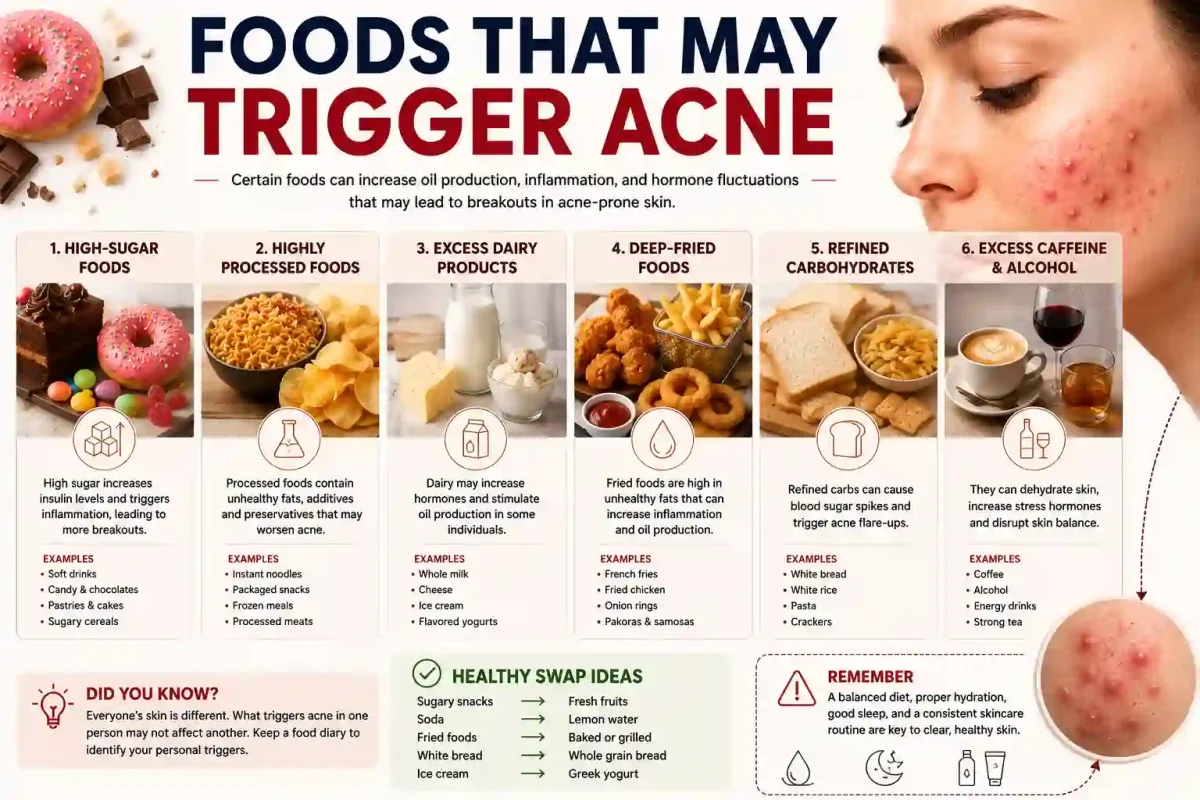
High-Sugar Foods
-
Soft drinks
-
Candy
-
Pastries
Highly Processed Foods
-
Chips
-
Instant noodles
-
Fast food
Excess Dairy
Some individuals may find that certain dairy products worsen breakouts.
Deep-Fried Foods
May contribute to inflammation in some people.
Keeping a food diary can help identify personal triggers.
Lifestyle Habits for Clear Skin
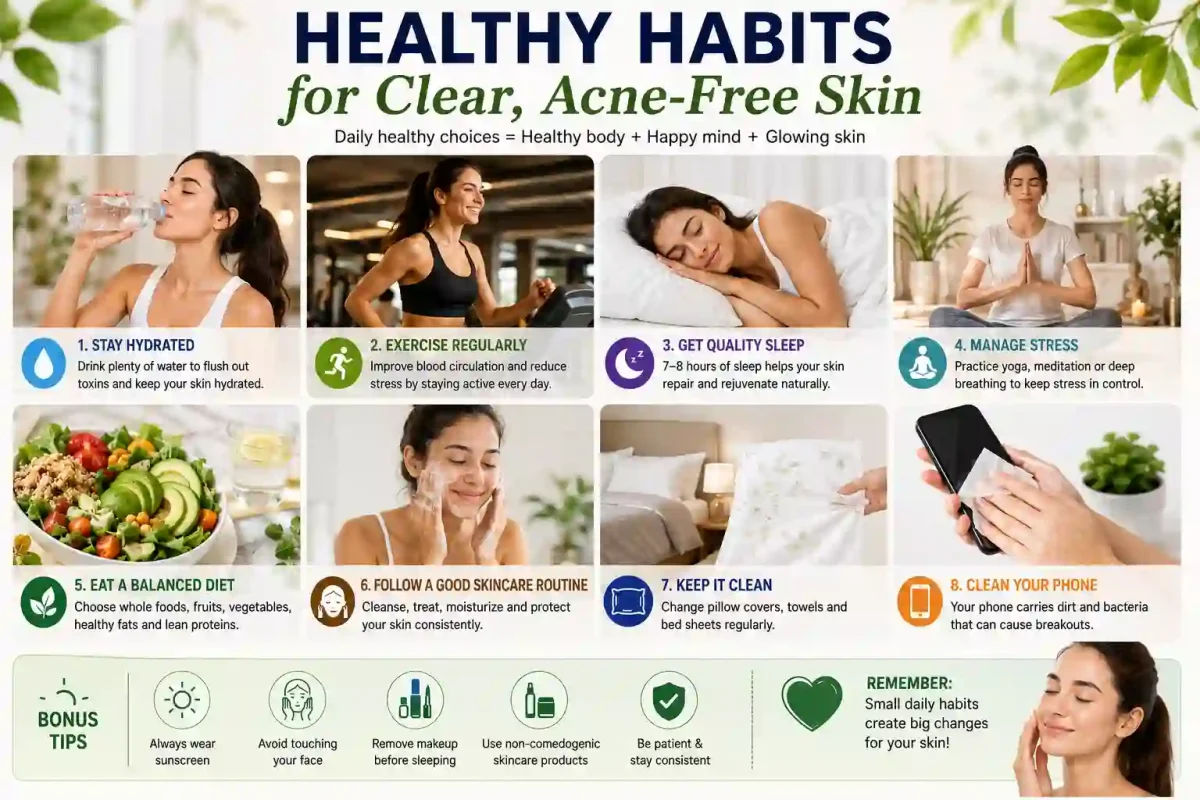
Drink More Water
Hydration supports overall skin health.
Sleep 7–8 Hours Daily
Sleep helps skin repair itself.
Change Pillow Covers Regularly
Reduces dirt and bacteria accumulation.
Clean Mobile Phones
Phones often carry bacteria that can transfer to skin.
Exercise Regularly
Improves circulation and overall wellness.
Manage Stress
Try:
-
Meditation
-
Yoga
-
Walking
-
Deep breathing
How to Prevent Acne Scars
Acne scars can be more difficult to treat than acne itself.
To reduce scar risk:
-
Avoid picking pimples
-
Use sunscreen daily
-
Follow a consistent skincare routine
-
Treat acne early
-
Seek professional advice for severe acne
Common Acne Myths
Myth 1: Acne Happens Only to Teenagers
False. Adults can develop acne too.
Myth 2: Washing Your Face Frequently Cures Acne
False. Overwashing may irritate skin.
Myth 3: Sun Exposure Clears Acne
False. Excess sun exposure can worsen pigmentation and damage skin.
Myth 4: Moisturizers Cause Acne
False. Non-comedogenic moisturizers can benefit acne-prone skin.
Frequently Asked Questions (FAQs)
Can acne go away naturally?
Mild acne may improve over time, but proper skincare often helps manage breakouts more effectively.
Is oily skin the only cause of acne?
No. Hormones, genetics, stress, and lifestyle factors can all contribute.
Which skincare ingredient is best for acne?
Salicylic Acid, Niacinamide, and Hyaluronic Acid are commonly used in acne-focused skincare routines.
Can diet affect acne?
Yes. Some people find that high-sugar and highly processed foods contribute to breakouts.
Does sunscreen help acne-prone skin?
Yes. Sunscreen helps protect skin from UV damage and post-acne pigmentation.
Final Thoughts
Acne is one of the most common skin concerns worldwide, but understanding its causes can make a huge difference in managing breakouts.
A balanced approach that combines:
-
Proper skincare
-
Healthy eating
-
Stress management
-
Consistent sun protection
-
Good lifestyle habits